




ICAO Publications Explained: The Dangerous Goods Documents Every Aviation Professional Should Know
What are ICAO publications for dangerous goods? ICAO publications for dangerous goods are the official documents issued by the International Civil Aviation Organization that set the international rules for shipping hazardous materials by air. The core publication is the Technical Instructions (Doc 9284), which contains the legally binding requirements that all ICAO member states must adopt into their national law.
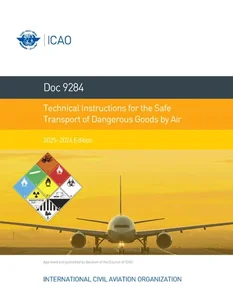
Doc 9284
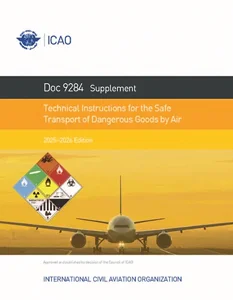
Doc 9284SU
If you work in aviation dangerous goods, you’ve probably come across references to ICAO publications without being entirely sure which ones you actually need. There’s the Technical Instructions, the Supplement, the Emergency Response Guidance, and then the IATA DGR sitting alongside all of them. It can be confusing, especially when you’re trying to work out what’s legally required and what’s optional.
This guide breaks down each of the main ICAO dangerous goods publications, explains what they contain, and spells out who should have them. If you’ve been searching for information about these documents but haven’t been sure which ones to buy, this should clear that up.
How ICAO Dangerous Goods Regulations Work
The rules for shipping dangerous goods by air start at the United Nations. The UN Committee of Experts on the Transport of Dangerous Goods produces model regulations that apply across all transport modes. ICAO takes those UN recommendations and adapts them specifically for aviation.[ 1 ]
The legal framework sits in Annex 18 to the Chicago Convention, which is the international treaty underpinning all civil aviation.[ 2 ] Annex 18 sets out the broad principles for safe transport of dangerous goods by air. It’s binding on all 193 ICAO member states. But Annex 18 doesn’t contain the operational detail. For that, it points to the Technical Instructions (Doc 9284), which carry the full set of classification, packaging, marking, labelling, and documentation requirements.
In Australia, CASA (the Civil Aviation Safety Authority) implements these obligations through Part 92 of the Civil Aviation Safety Regulations.[ 3 ] When CASA refers to “the Technical Instructions” in its regulations and guidance material, it means Doc 9284.
ICAO Technical Instructions (Doc 9284)
This is the primary ICAO publication for dangerous goods by air. The current edition is the 2025-2026 edition, which took effect on 1 January 2025 and remains valid until 31 December 2026.[ 4 ] It’s the nineteenth biennial edition. ICAO publishes a new edition every two years.
Doc 9284 contains the complete set of requirements: the dangerous goods list with UN numbers, packing instructions, quantity limits for passenger and cargo aircraft, shipper declaration requirements, marking and labelling specifications, and the rules for specific categories like lithium batteries, radioactive materials, and infectious substances.
The Technical Instructions are the legal baseline. Every ICAO member state is required to put legislation in place that aligns with them.[ 2 ] If you’re a government regulator, a national aviation authority, or a training provider building courses around the regulatory framework, Doc 9284 is the source document you work from.
Addenda and corrigenda
Between editions, ICAO issues addenda (amendments) and corrigenda (error corrections). These can be significant. The most recent addendum to the 2025-2026 edition, Addendum No. 1, took effect on 27 March 2026 and introduced new restrictions on portable power banks carried by passengers.[ 5 ] That change came directly from the investigation into the Air Busan cabin fire at Gimhae International Airport in January 2025, where a lithium ion power bank in an overhead bin was identified as the likely cause.
Addenda are published on the ICAO website and must be applied from their effective date. If you hold Doc 9284, you need to check for addenda and apply them to stay current.
The Supplement to the Technical Instructions (Doc 9284SU)
The Supplement is a separate publication that sits alongside Doc 9284. It provides additional guidance that’s primarily aimed at states and their competent authorities, though it’s useful for anyone who needs to understand state level variations.[ 6 ]
The most practically important section is the table of state variations. Individual countries can impose requirements that are stricter than or additional to the ICAO baseline. Australia has its own variations, and so do many of the countries your cargo might transit through. The Supplement documents all of these in one place.
It also includes guidance on training programmes, approval processes for dangerous goods shipments, and the procedures states should follow when granting exemptions or approvals. If you’re a training provider designing a CASA approved course, or a freight forwarder handling international shipments that route through multiple jurisdictions, the Supplement fills in gaps that the main Technical Instructions don’t cover.
Emergency Response Guidance (Doc 9481)
Doc 9481 provides guidance for dealing with dangerous goods incidents on board aircraft during flight. It’s sometimes called the “Red Book” because of its cover colour.[ 7 ]
It contains checklists for both flight crew and cabin crew, along with a list of dangerous goods organised by UN number. Each entry identifies the appropriate emergency response drill and any specific safety concerns for that substance. The current edition covers 2025-2026, matching the Technical Instructions cycle.
Airlines use Doc 9481 as the basis for their own onboard emergency procedures. Operators can include all or part of it in their operations manual, and it’s also referenced in dangerous goods training programmes for crew members.[ 7 ] The document only covers in-flight incidents. Ground emergencies fall under airport emergency procedures rather than this publication.
How ICAO Publications Relate to the IATA DGR
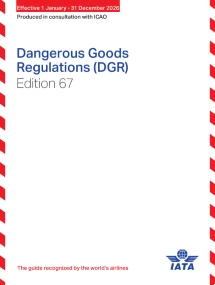
This is where people often get confused. The IATA Dangerous Goods Regulations (DGR) is not an ICAO publication. It’s produced by the International Air Transport Association, which is the airline industry body. But the DGR is built on top of the ICAO Technical Instructions.[ 8 ]
Think of it this way: the Technical Instructions set the international legal floor. The IATA DGR takes that floor and adds airline industry requirements on top. In some areas the DGR is stricter than the Technical Instructions. It also includes operator variations (individual airline restrictions) and is formatted as a practical field manual for shippers and freight handlers.
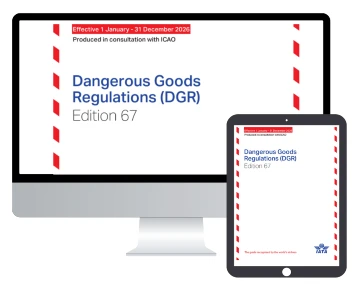
The DGR is updated annually (the current edition is the 67th Edition 2026), while the Technical Instructions update every two years. Because the DGR incorporates the ICAO requirements and adds to them, compliance with the DGR means compliance with the Technical Instructions.[ 8 ]
So who needs which? If you’re a shipper, freight forwarder, ground handler, or anyone preparing actual dangerous goods shipments for air transport, the IATA DGR is your day to day working document. If you’re a regulator, a competent authority, a training provider building courses from the legal framework, or you need to understand how national variations and state requirements fit together, you need the ICAO Technical Instructions and probably the Supplement as well.
Many organisations need both. The DGR for operations and the Technical Instructions for compliance audits, regulatory submissions, and training development.
Which ICAO Publication Do You Need?
Here’s a quick guide based on role.
Government regulators and national aviation authorities need Doc 9284 (Technical Instructions) and Doc 9284SU (Supplement). These are your primary reference documents for developing and enforcing national dangerous goods regulations.
Training providers designing CASA approved courses need Doc 9284 at minimum, and Doc 9284SU if the course covers state variations or approval processes. The IATA DGR is also needed if you’re training shippers or ground handlers on practical shipment preparation.
Airlines and operators need Doc 9481 (Emergency Response Guidance) for crew procedures, and the IATA DGR for cargo acceptance. Many also hold Doc 9284 for internal compliance reference.
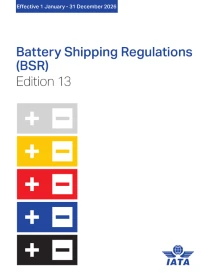
Shippers and freight forwarders preparing dangerous goods consignments will get the most practical value from the IATA DGR. If you’re shipping lithium batteries specifically, the IATA Battery Shipping Regulations (BSR) covers those requirements in a focused format.
For a broader view of how air, sea, and road dangerous goods regulations connect in Australia, see our guide to Dangerous Goods Compliance in Australia.
Important: Regulations change frequently. Always verify requirements against the current official edition of the relevant publication. This article is intended as a general guide only and does not constitute legal or compliance advice.
Frequently Asked Questions
What is the current edition of the ICAO Technical Instructions?
The current edition is the 2025-2026 edition (Doc 9284), which took effect on 1 January 2025 and remains valid until 31 December 2026. An addendum (Addendum No. 1) was issued effective 27 March 2026 with updated power bank requirements.
Do I need the ICAO Technical Instructions if I already have the IATA DGR?
It depends on your role. The IATA DGR incorporates the ICAO requirements and adds airline industry requirements on top. For practical shipment preparation, the DGR is usually sufficient. But regulators, training providers, and compliance teams often need Doc 9284 as the legal source document, particularly for audits and course development.
What is the difference between the Technical Instructions and the Supplement?
Doc 9284 (the Technical Instructions) contains the binding operational requirements for shipping dangerous goods by air. Doc 9284SU (the Supplement) provides additional guidance aimed at states and competent authorities, including the table of state variations, training guidance, and approval procedures.
How often are ICAO dangerous goods publications updated?
ICAO publishes new editions of the Technical Instructions, the Supplement, and the Emergency Response Guidance every two years. Between editions, addenda and corrigenda may be issued to address urgent changes. The IATA DGR, by comparison, updates annually.
Where can I buy ICAO publications in Australia?
Dandy Booksellers Australia stocks the ICAO Technical Instructions (Doc 9284) and the Supplement (Doc 9284SU) with free delivery to Australian and New Zealand addresses. Order at dandybooksellers.com.au.
What is ICAO Doc 9481?
Doc 9481 is the Emergency Response Guidance for Aircraft Incidents Involving Dangerous Goods, sometimes called the Red Book. It provides checklists and response drills for flight and cabin crew dealing with dangerous goods incidents during flight. Airlines use it as the basis for their onboard emergency procedures.
References
[ 1 ] ICAO, Dangerous Goods / Technical Instructions — https://www.icao.int/Dangerous-Goods/Technical-Instructions
[ 2 ] ICAO, Annex 18 to the Convention on International Civil Aviation — https://applications.icao.int/postalhistory/annex_18_the_safe_transport_of_dangerous_goods_by_air.htm
[ 3 ] CASA, Dangerous goods and air freight — https://www.casa.gov.au/operations-safety-and-travel/safety-advice/dangerous-goods-and-air-freight
[ 4 ] ICAO Store, Technical Instructions Doc 9284 (2025-2026) — https://store.icao.int/en/technical-instructions-for-the-safe-transport-of-dangerous-goods-by-air-doc-9284
[ 5 ] Dangerous Goods Online Training, Addendum No. 1 to ICAO Technical Instructions 2025-2026 — https://www.dgonline.training/addendum-no-1-icao-technical-instructions-2025-2026/
[ 6 ] ICAO Store, Supplement to Technical Instructions Doc 9284SU (2025-2026) — https://store.icao.int/en/supplement-to-the-technical-instructions-for-the-safe-transport-of-dangerous-goods-by-air-doc-9284su
[ 7 ] ICAO Store, Emergency Response Guidance Doc 9481 (2025-2026) — https://store.icao.int/en/emergency-response-guidance-for-aircraft-incidents-involving-dangerous-goods-doc-9481
[ 8 ] IATA, Frequently Asked Questions on Transportation of Dangerous Goods by Air — https://www.iata.org/en/programs/cargo/dgr/faq/
Related products


Free Delivery

Free delivery to all Australian and New Zealand mailing addresses.
Discounted E-books
For faster turnaround.
Download link via email within a couple of hours.
Information
 Home
HomeNew Products

Email us at sales@dandybooksellers.com.au
Australia
Dandy Booksellers
58 Allambi Avenue
Broadbeach Waters
4218 Queensland
United Kingdom
Dandy Booksellers Ltd
15 Hoopers Yard
Kimberley Road
London NW6 7EJ
Company registration number: 4846829



All prices in Australian Dollars (AUD)
