



IMDG Code 2024: What It Is, Who Needs It, and Why It Matters for Sea Transport
What is the IMDG Code? The IMDG Code (International Maritime Dangerous Goods Code) is the globally accepted standard for the transport of dangerous goods by sea, published by the International Maritime Organization (IMO). Made mandatory under Chapter VII of the SOLAS Convention, the current edition is Amendment 42-24, which became mandatory on 1 January 2026.
If your business moves goods by sea — whether as a shipper, freight forwarder, shipping line, or port operator — the IMDG Code is the rulebook. It governs how dangerous goods are classified, packaged, documented, and handled on international voyages. Here is a plain-language guide to what it is and why it matters.
What Is the IMDG Code?
The International Maritime Dangerous Goods (IMDG) Code is published by the International Maritime Organization (IMO).[ 1 ] It is the globally accepted standard for the transport of dangerous goods by sea, covering everything from industrial chemicals and explosives to batteries, paints, and aerosols.
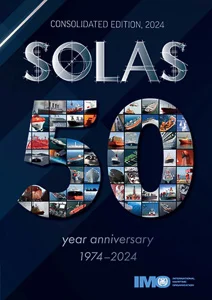
The IMDG Code is made mandatory under Chapter VII of the SOLAS Convention (International Convention for the Safety of Life at Sea),[ 2 ] which means compliance is a legal requirement for vessels engaged in international voyages. Australia, as a signatory to SOLAS, requires Australian-flagged ships and international vessels calling at Australian ports to comply with the IMDG Code.
What Does the IMDG Code 2024 Cover?
The IMDG Code is a comprehensive document covering the classification of dangerous goods across nine classes — from explosives (Class 1) through flammable liquids (Class 3), toxic substances (Class 6), radioactive materials (Class 7), and corrosives (Class 8), to miscellaneous dangerous substances (Class 9).
For each substance or article, the Code specifies the UN number, proper shipping name, class and packing group, packing instructions, quantity limits, labelling and marking requirements, placarding requirements for containers, segregation rules (which goods must not be stowed together), and the documentation required for the shipment.
It also includes emergency response guidance and provisions for the reporting of dangerous goods incidents at sea.
Who Is Required to Use the IMDG Code?
The IMDG Code applies to everyone in the maritime supply chain who handles international shipments of dangerous goods. This includes exporters and importers preparing dangerous goods consignments, freight forwarders and customs brokers, shipping lines and vessel operators, container packing operators and depot staff, and port authorities and stevedores.
In Australia, AMSA (Australian Maritime Safety Authority) is the competent authority responsible for enforcing IMDG Code compliance.[ 3 ] Non-compliance can result in refusal of cargo, detention of vessels, substantial fines, and in the event of an incident, significant legal liability.
See also: Dangerous Goods Compliance in Australia: Road, Air and Sea Requirements
The Current Edition: IMDG Code Amendment 42-24
The current edition of the IMDG Code is Amendment 42-24. It was available for voluntary application from 1 January 2025 and became mandatory on 1 January 2026, replacing Amendment 41-22. This edition introduced a range of updates to dangerous goods entries, packing instructions, and provisions related to lithium batteries, including updates to stowage and segregation requirements.[ 1 ]
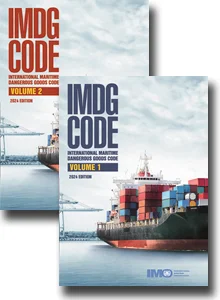
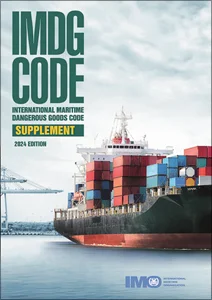
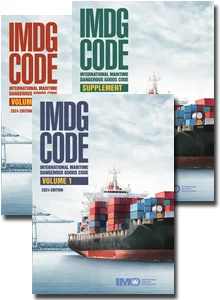
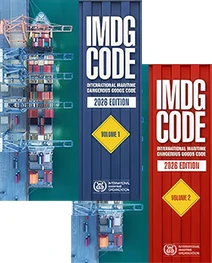
The IMDG Code is published in two volumes and a supplement. The supplement contains, among other things, the Emergency Response Procedures for Ships Carrying Dangerous Goods (EmS Guide), the Medical First Aid Guide (MFAG), and the Reporting Procedures. Most operations require access to the full set.
Lithium Batteries Under the IMDG Code
Lithium batteries are subject to specific requirements under the IMDG Code, including stowage, segregation, and documentation rules. Amendment 42-24 updated a number of provisions relating to lithium battery transport by sea. If your business ships devices, power tools, or other battery-containing goods internationally, it is worth reviewing these provisions in detail.
See also: Shipping Lithium Batteries by Air and Sea: What the Regulations Actually Require
Printed or Digital IMDG Code?
The IMDG Code is available in both printed and digital formats. Many professionals prefer a physical copy for daily desk reference — it is a working document that gets opened constantly, annotated, and checked against shipment paperwork. Digital versions offer the advantage of searchability and are particularly useful for organisations managing multiple editions or needing access from multiple locations.
For Australian buyers, the geographical distance from the UK — where printed books are held — means that digital delivery is often faster and more practical, particularly where time-sensitive compliance decisions are involved.
Important: Regulations change frequently. Always verify requirements against the current official edition of the relevant publication. This article is intended as a general guide only and does not constitute legal or compliance advice.
Frequently Asked Questions
What is the current edition of the IMDG Code?
The current edition is Amendment 42-24 (the 2024 edition). It was available for voluntary application from 1 January 2025 and became mandatory on 1 January 2026, replacing Amendment 41-22.
Is the IMDG Code mandatory?
Yes. The IMDG Code is made mandatory under Chapter VII of the SOLAS Convention for vessels engaged in international voyages. Australia, as a SOLAS signatory, requires compliance for Australian-flagged ships and international vessels calling at Australian ports.
Who is required to comply with the IMDG Code?
Everyone in the maritime supply chain who handles international shipments of dangerous goods — including exporters, importers, freight forwarders, shipping lines, container packing operators, depot staff, and port authorities and stevedores.
Do I need both the IMDG Code and the Supplement?
Most operations require access to both. The main IMDG Code contains the classification, packing, and documentation rules. The Supplement contains the EmS Guide (emergency response), the Medical First Aid Guide (MFAG), and Reporting Procedures — all of which are referenced by the main Code. A Code-and-Supplement pack is available from Dandy Booksellers Australia.
How does the IMDG Code relate to the SOLAS Convention?
The SOLAS Convention (International Convention for the Safety of Life at Sea) is the overarching international maritime safety treaty. The IMDG Code is the specific instrument made mandatory under Chapter VII of SOLAS, dealing with the carriage of dangerous goods in packaged form.
Where can I buy the IMDG Code in Australia?
The IMDG Code 2024 (Amendment 42-24) is available from Dandy Booksellers Australia in print and digital formats, including as a Code-and-Supplement pack. Fast email delivery for digital editions.
References
[ 1 ] IMO — IMDG Code Official Page — https://www.imo.org/en/OurWork/Safety/Pages/DangerousGoods-default.aspx
[ 2 ] IMO — SOLAS Convention — https://www.imo.org/en/About/Conventions/Pages/International-Convention-for-the-Safety-of-Life-at-Sea-(SOLAS),-1974.aspx
[ 3 ] AMSA — Dangerous Goods at Sea — https://www.amsa.gov.au/vessels-operators/sea-cargo/dangerous-goods
Related products
Free Delivery

Free delivery to all Australian and New Zealand mailing addresses.
Discounted E-books
For faster turnaround.
Download link via email within a couple of hours.
Information
 Home
HomeNew Products

Email us at sales@dandybooksellers.com.au
Australia
Dandy Booksellers
58 Allambi Avenue
Broadbeach Waters
4218 Queensland
United Kingdom
Dandy Booksellers Ltd
15 Hoopers Yard
Kimberley Road
London NW6 7EJ
Company registration number: 4846829



All prices in Australian Dollars (AUD)
