


IMO Model Courses Explained: Which Course Is Right for Your Crew?
What are IMO Model Courses? IMO Model Courses are official training frameworks published by the International Maritime Organization (IMO). Developed to support implementation of the STCW Convention, they provide maritime training institutes with standardised course structures, syllabuses, and instructor guidance for a wide range of seafarer competencies.
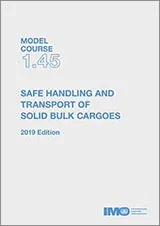
IMO Model Course 1.45 — available from Dandy Booksellers Australia
If you manage crew training for a vessel, fleet, or maritime training institution, you have likely encountered references to IMO Model Courses. But with a large and established series covering everything from radar navigation to medical care, knowing which publications you actually need can be confusing.
This guide explains what IMO Model Courses are, how they relate to STCW requirements, and which courses are most commonly sought by maritime operators in Australia and New Zealand.
What Are IMO Model Courses and Why Do They Exist?
The IMO Model Course programme was introduced following the adoption of the International Convention on Standards of Training, Certification and Watchkeeping for Seafarers (STCW) in 1978.[ 1 ] The original goal was straightforward: give maritime training providers around the world a common starting point for developing compliant, high-quality seafarer training.
Specifically, the courses are designed to help demonstrate compliance with the knowledge, understanding, and proficiency (KUP) tables set out in the STCW Code. Each IMO Model Course is reviewed and developed with input from IMO member governments and relevant expert groups. They are not mandatory in themselves. However, they carry significant weight because maritime administrations responsible for approving training courses, including the Australian Maritime Safety Authority (AMSA), often reference them as a benchmark when assessing whether a course meets STCW standards.
Training providers must ultimately demonstrate compliance with STCW requirements as implemented by their national maritime administration. Each course publication typically includes a course framework, a timetable outline, a detailed teaching syllabus with learning objectives, instructor guidance notes, and in many cases a student compendium.
How IMO Model Courses Are Numbered and Organised
IMO Model Courses are identified by a numbered reference, for example Model Course 1.45 or Model Course 6.09, that serves primarily as an identifier rather than a strict classification system. The IMO e-publications catalogue organises the series into functional groups including Maritime Safety (the largest group, covering topics such as tanker operations, fire fighting, survival techniques, navigation, and cargo handling), Cargoes (covering dangerous goods and bulk cargo training), and Maritime Administration (covering port state control, survey, flag state implementation, and instructor training).
Within those groups, individual courses carry their numbered reference, for example Model Course 1.20 for Fire Prevention and Fire Fighting, Model Course 3.09 (2026 Edition) for Port State Control, and Model Course 6.09 for Training Course for Instructors.
The Most Commonly Sought IMO Model Courses for Australian Operators
While the series spans dozens of distinct titles, a relatively small number account for the majority of purchases by Australian and New Zealand maritime operators. The following are among the most frequently requested.
Model Course 1.45 (2019 Edition) — Safe Handling and Transport of Solid Bulk Cargoes
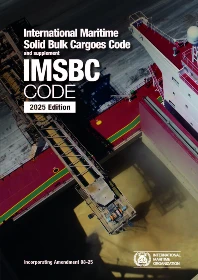
This is one of the most searched IMO Model Courses in the region, and for good reason. Australia is a major exporter of bulk commodities including iron ore, coal, and grain, all of which are subject to the International Maritime Solid Bulk Cargoes (IMSBC) Code.[ 2 ]
Model Course 1.45 (2019 Edition) provides the training framework for seafarers and shore-side personnel involved in the acceptance, handling, and transport of solid bulk cargoes. It covers IMSBC Code requirements, cargo liquefaction risks, and enclosed space entry procedures.
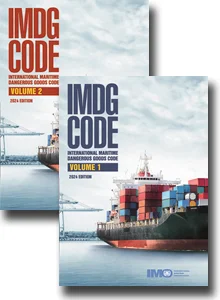
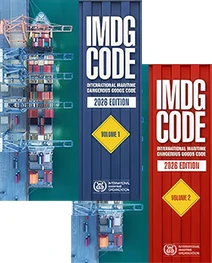
See also our guide to the IMDG Code 2024, which covers dangerous goods carried by sea in packaged form.
Model Course 1.22 — Bridge Resource Management
Bridge Resource Management (BRM) is a core STCW competency at management level. Model Course 1.22 (2023 Edition) provides training institutes with the syllabus and instructor framework for teaching effective bridge team communication, situational awareness, and decision-making under pressure. It is particularly relevant for deck officers working toward STCW certification at management level.
Model Course 1.20 — Fire Prevention and Fire Fighting
Mandatory for all seafarers under STCW, fire safety training is one of the most commonly delivered courses in the industry. Model Course 1.20 (2023 Edition) provides the current training framework for basic fire fighting, updated to reflect current practices and equipment.
Model Course 1.10 (2014 Edition) — Dangerous, Hazardous and Harmful Cargo
For seafarers involved in the carriage of dangerous, hazardous, and harmful cargoes by sea, Model Course 1.10 provides the training syllabus aligned with STCW requirements. It covers IMDG Code principles and cargo emergency response procedures.
Model Course 6.09 — Training Course for Instructors
Model Course 6.09 is aimed not at seafarers but at the people who train them. It provides a framework for maritime training instructors to develop and deliver effective, competency-based training that meets STCW requirements. It is commonly used by training providers developing programmes for regulatory approval, and by experienced mariners moving into an instructing or assessing role.
Who Needs to Purchase IMO Model Courses?
IMO Model Courses are primarily purchased by maritime training institutes and academies developing or updating STCW-compliant course programmes, fleet managers and shipping companies establishing or reviewing in-house training, port authorities and terminal operators involved in bulk cargo or dangerous goods training, maritime administrations and flag state representatives assessing training standards, and individual instructors preparing course materials to submit for regulatory approval.
Individual seafarers who simply need to attend a course do not usually need to purchase the model course publication. However, seafarers seeking to understand the scope and competencies of a course they are attending may find the publications useful reference material.
Print or Digital: Which Format Is Right for You?
IMO Model Courses are available in both print and digital (e-Reader) formats. The digital editions are accessed via the IMO Bookshelf platform, with a download link delivered by email within a few hours of purchase, making them the faster option when a training programme is being developed to a deadline.
Print editions are the preferred choice for training institutes that want a physical reference copy for their library, or for instructors who prefer to annotate and work from a hard copy during course development. Both formats carry the same authoritative content.
Dandy Booksellers Australia is an official authorised distributor of IMO publications, supplying the complete range of IMO Model Courses with free delivery to all Australian and New Zealand addresses. You can browse the full range in our IMO Model Courses section.
IMO Model Courses and Dangerous Goods Compliance
Several IMO Model Courses intersect directly with dangerous goods regulations. Model Course 1.10 covers sea transport of dangerous goods in the context of the IMDG Code, while Model Course 1.45 covers solid bulk cargoes under the IMSBC Code. Training providers delivering dangerous goods training for maritime operators should ensure they hold current editions of the relevant model courses alongside the applicable codes.
For a broader overview of how dangerous goods regulations operate across road, air, and sea transport in Australia, see our guide to Dangerous Goods Compliance in Australia.
Important: Regulations change frequently. Always verify requirements against the current official edition of the relevant publication. This article is intended as a general guide only and does not constitute legal or compliance advice.
Frequently Asked Questions
What is an IMO Model Course?
An IMO Model Course is an official training framework published by the International Maritime Organization. It provides maritime training institutes with a standardised syllabus, course outline, and instructor guidance to help deliver competency-based training aligned with STCW requirements and other IMO instruments.
Are IMO Model Courses mandatory?
IMO Model Courses are not mandatory in themselves. However, they are widely used by maritime administrations when assessing whether a training programme meets STCW standards, and using them makes it significantly easier for training providers to obtain regulatory approval for their courses.
Who publishes IMO Model Courses?
IMO Model Courses are published by the International Maritime Organization (IMO), headquartered in London. Each course is reviewed and developed with input from IMO member governments and relevant expert groups before publication.
Where can I buy IMO Model Courses in Australia?
Dandy Booksellers Australia is an authorised IMO distributor supplying the complete range of IMO Model Courses with free delivery to Australian and New Zealand addresses. Both print and digital editions are available. Browse the full range at dandybooksellers.com.au.
What is the difference between IMO Model Course 1.45 and the IMSBC Code?
The IMSBC Code is the regulatory instrument that sets out the rules for the safe handling and transport of solid bulk cargoes at sea. IMO Model Course 1.45 is the training framework that helps maritime training providers teach those rules effectively. Operators need the IMSBC Code to comply with regulations; training institutes need Model Course 1.45 to teach compliance.
How do I access digital IMO Model Courses?
Digital editions of IMO Model Courses are delivered as an e-Reader link via email after purchase, typically within a few hours. They are accessed through the IMO Bookshelf platform and can be read online on any device. Digital editions are ideal when you need quick access for course development.
References
[ 1 ] International Maritime Organization — Model Courses Programme — https://www.imo.org/en/OurWork/HumanElement/pages/ModelCourses.aspx
[ 2 ] International Maritime Solid Bulk Cargoes (IMSBC) Code — IMO — https://www.imo.org/en/OurWork/Safety/Pages/BulkCargoes.aspx

Free Delivery

Free delivery to all Australian and New Zealand mailing addresses.
Discounted E-books
For faster turnaround.
Download link via email within a couple of hours.
Information
 Home
HomeNew Products

Email us at sales@dandybooksellers.com.au
Australia
Dandy Booksellers
58 Allambi Avenue
Broadbeach Waters
4218 Queensland
United Kingdom
Dandy Booksellers Ltd
15 Hoopers Yard
Kimberley Road
London NW6 7EJ
Company registration number: 4846829



All prices in Australian Dollars (AUD)
