




What Is the IMSBC Code? Bulk Cargo Safety for Maritime Operators
What is the IMSBC Code? The International Maritime Solid Bulk Cargoes Code (IMSBC Code) is the IMO regulation that governs the safe loading, stowage, carriage and discharge of solid bulk cargoes by sea. Made mandatory under SOLAS Chapter VI from 1 January 2011, the Code classifies cargoes by their physical and chemical properties and sets out testing, documentation and handling procedures to prevent cargo shift, liquefaction and onboard chemical hazards.
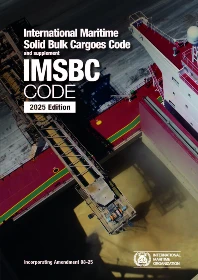
IMSBC Code 2025 Edition — available from Dandy Booksellers Australia
If you operate, manage or load bulk carriers, the IMSBC Code is one of the core references you need on board and in the office. It replaced the older Code of Safe Practice for Solid Bulk Cargoes (the BC Code) in 2011 and has been amended regularly since. The current 2025 Edition incorporates Amendment 07-23, which became mandatory on 1 January 2025.[ 1 ] In Australia, the Code is given legal effect through AMSA’s Marine Order 34.[ 2 ]
This guide explains what the IMSBC Code covers, how cargoes are classified, what shippers and masters are required to do, and where the Code fits within Australian maritime regulation.
Why the IMSBC Code Exists
Solid bulk cargoes can behave unpredictably at sea. A cargo that looks dry and stable on the wharf can liquefy under the vibration and rolling of a vessel, turning into a fluid mass that shifts to one side of the hold. When that happens, the ship loses stability rapidly. In some cases, the vessel capsizes with little warning.
Between 2010 and 2015 alone, cargo liquefaction was linked to the loss of multiple bulk carriers and dozens of seafarers’ lives.[ 3 ] Other solid bulk cargoes present chemical hazards: some deplete oxygen in the hold, others are flammable or corrosive. The IMSBC Code exists to give ship operators, shippers and port authorities a single, internationally agreed framework for identifying these risks and managing them before the vessel sails.
What the IMSBC Code Covers
The Code applies to all ships subject to SOLAS that carry solid bulk cargoes other than grain (grain is covered separately under the International Code for the Safe Carriage of Grain in Bulk).[ 4 ] It sets out requirements across several areas.
Cargo Classification: Groups A, B and C
Every solid bulk cargo listed in the Code is assigned to one or more of three groups.[ 5 ]
Group A cargoes may liquefy if their moisture content exceeds the transportable moisture limit (TML). Examples include iron ore fines, nickel ore and many mineral concentrates. These are the cargoes responsible for the vessel losses mentioned above.
Group B cargoes possess chemical hazards that could create a dangerous situation on board. Risks include fire, explosion, toxic gas release and corrosion. Some cargoes, such as coal, fall into both Group A and Group B because they can liquefy and also emit methane or self-heat.
Group C covers cargoes that are neither liable to liquefy nor chemically hazardous under normal transport conditions. They still require proper loading and trimming, but the testing obligations are less onerous.
Individual Cargo Schedules
The Code contains individual schedules for hundreds of specific cargoes. Each schedule lists the cargo group, a description of the material, its known hazards, stowage and handling requirements, hold cleaning procedures, and any special precautions. When a cargo is not specifically listed, the Code requires the shipper to provide detailed information about its properties so the master can assess the risk.
Testing and Certification for Group A Cargoes
For any Group A cargo (or cargo that may liquefy), the shipper must provide the master with a certificate stating the transportable moisture limit and the actual moisture content of the cargo.[ 6 ] The TML test must have been conducted within six months of loading. The moisture content test must be carried out as close as practicable to the loading date, and never more than seven days before loading begins. If the moisture content exceeds the TML, the cargo must not be loaded.
Masters also have an independent obligation. If the cargo appears visually wet or different from what the documentation describes, the master can refuse to load or request additional testing. This is a critical safety provision: documentation alone is not enough if the cargo on the conveyor belt doesn’t match the paperwork.
How Solid Bulk Cargo Causes Vessel Loss
The most dangerous failure mode for Group A cargoes is liquefaction. The mechanism works as follows. A cargo with fine particles and moisture content near its TML boards the vessel looking solid. At sea, the vessel’s engine vibrations and wave-induced rolling compact the cargo. As the particles settle, water is squeezed out and rises to the surface. The top layer of cargo becomes a dense slurry.
Once liquefied, the cargo shifts freely with the ship’s motion. Unlike a solid cargo that might shift a few degrees and settle, a liquefied cargo flows to the low side of the hold and stays there. The resulting list increases with each roll. The vessel can capsize in minutes.[ 3 ]
The IMSBC Code’s TML and moisture testing regime is specifically designed to prevent this. If the moisture content stays below the TML, the cargo should not liquefy under normal sea conditions.
Amendment 07-23 and the 2025 Edition
The IMSBC Code is updated through a regular amendment cycle managed by the IMO’s Maritime Safety Committee (MSC). Amendments are typically adopted two years before they become mandatory, with a voluntary application period in between.[ 1 ]
The 2025 Edition of the IMSBC Code incorporates Amendment 07-23 (adopted by resolution MSC.539(107)), which became mandatory on 1 January 2025.[ 7 ] Key changes in this amendment include new definitions for “dynamic separation” and “cargoes which may undergo dynamic separation,” fourteen new cargo schedules added to the Code, a new requirement for shippers to declare the bulk density of the cargo as part of the mandatory cargo information, and revisions to several existing cargo schedules.
The 2025 Edition also includes Amendment 08-25, which may be applied voluntarily from 1 January 2026, ahead of its expected mandatory entry into force on 1 January 2027.
The IMSBC Code in Australia
In Australia, the IMSBC Code is given legal force through Marine Order 34 (Solid bulk cargoes) 2016, administered by the Australian Maritime Safety Authority (AMSA).[ 2 ] Marine Order 34 applies to Australian-registered vessels and to foreign vessels in Australian waters, ports and internal waters.
The Marine Order references both SOLAS Chapter VI (carriage of cargoes) and Chapter VII (carriage of dangerous goods). This means that solid bulk cargoes classified as dangerous goods under the IMSBC Code must also comply with the dangerous goods documentation requirements in SOLAS Chapter VII.
Australia is a major bulk commodity exporter, particularly iron ore, coal and mineral sands. Compliance with the IMSBC Code is directly relevant to loading operations at Australian ports. AMSA has the authority to inspect vessels, detain ships that do not meet SOLAS requirements, and prohibit departure where cargo documentation or conditions are unsatisfactory. For related sea transport regulations, see our guide to the SOLAS Convention and our overview of sea transport publications.
Shipper and Operator Obligations Under the IMSBC Code
The Code places clear responsibilities on both shippers and ship operators.
Shippers must provide accurate cargo information before loading. This includes the correct shipping name, the cargo group (A, B, or C), bulk density, the TML and actual moisture content for Group A cargoes, any special properties or hazards, and recommended stowage and handling procedures. All cargo information must be accompanied by a signed declaration confirming its accuracy.[ 6 ]
Ship operators and masters must verify the cargo information, ensure the vessel is suitable for the cargo, apply the stowage and handling requirements specified in the Code, and monitor the cargo during the voyage. If there is any doubt about the accuracy of the cargo documentation, the master must not load until the matter is resolved.
Important: Regulations change frequently. Always verify requirements against the current official edition of the relevant publication. This article is intended as a general guide only and does not constitute legal or compliance advice.
Frequently Asked Questions
What does IMSBC stand for?
IMSBC stands for International Maritime Solid Bulk Cargoes. The IMSBC Code is published by the International Maritime Organization (IMO) and covers the safe handling and transport of solid bulk cargoes by sea.
When did the IMSBC Code become mandatory?
The IMSBC Code was adopted on 4 December 2008 by IMO resolution MSC.268(85) and became mandatory on 1 January 2011 under SOLAS Chapter VI. It replaced the earlier Code of Safe Practice for Solid Bulk Cargoes (BC Code).[ 1 ]
What is the current edition of the IMSBC Code?
The 2025 Edition is the current edition. It incorporates Amendment 07-23, mandatory from 1 January 2025, and also includes Amendment 08-25 for voluntary early application from 1 January 2026.[ 7 ] The IMSBC Code 2025 Edition is available from Dandy Booksellers Australia.
Does the IMSBC Code cover grain?
No. The carriage of grain in bulk is regulated separately under the International Code for the Safe Carriage of Grain in Bulk. The IMSBC Code covers all other solid bulk cargoes.[ 4 ]
What is the transportable moisture limit (TML)?
The TML is the maximum moisture content at which a Group A cargo can be safely shipped. If the actual moisture content exceeds the TML, the cargo must not be loaded because it may liquefy during the voyage. The TML must be tested within six months of loading.[ 6 ]
Where can I buy the IMSBC Code in Australia?
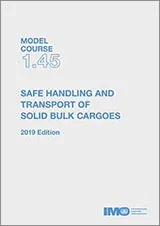
Dandy Booksellers Australia stocks the IMSBC Code 2025 Edition in digital format, along with related IMO publications including the IMDG Code, SOLAS, and IMO Model Course 1.45 for bulk cargo training.
References
[ 1 ] IMO — International Maritime Solid Bulk Cargoes (IMSBC) Code — https://www.imo.org/en/ourwork/safety/pages/cargoesinbulk-default.aspx
[ 2 ] AMSA — Marine Order 34 (Solid bulk cargoes) — https://www.amsa.gov.au/about/regulations-and-standards/marine-order-34-solid-bulk-cargoes
[ 3 ] Intercargo — Cargoes, Liquefaction — https://www.intercargo.org/topics/cargoes-liquefaction/
[ 4 ] IMO — International Maritime Solid Bulk Cargoes (IMSBC) Code (grain exclusion) — https://www.imo.org/en/ourwork/safety/pages/cargoesinbulk-default.aspx
[ 5 ] BIMCO — IMSBC Code Group A and B Cargoes — https://www.bimco.org/cargo/solid-bulk-cargo/imsbc-code/imsbc-code-group-a-and--b-cargoes
[ 6 ] Safety4Sea — Preventing the Risk of Liquefaction: Key Responsibilities — https://safety4sea.com/preventing-the-risk-of-liquefaction-key-responsibilities/
[ 7 ] BIMCO — Dry Bulk Cargoes Code: Amendments Coming into Force on 1 January 2025 — https://www.bimco.org/news-insights/bimco-news/2024/20241211-imsbc-code-entering-into-force/
Related products

IMSBC Code 2025 Edition Digital
Free Delivery

Free delivery to all Australian and New Zealand mailing addresses.
Discounted E-books
For faster turnaround.
Download link via email within a couple of hours.
Information
 Home
HomeNew Products

Email us at sales@dandybooksellers.com.au
Australia
Dandy Booksellers
58 Allambi Avenue
Broadbeach Waters
4218 Queensland
United Kingdom
Dandy Booksellers Ltd
15 Hoopers Yard
Kimberley Road
London NW6 7EJ
Company registration number: 4846829



All prices in Australian Dollars (AUD)
