




IATA DGR Print or Digital: Which Edition Should You Buy?
Should I buy the IATA DGR in print or digital? The IATA Dangerous Goods Regulations is sold as a printed manual (regular or spiral bound) and as a digital edition known as the eDGR. Both contain the same core regulations and content for the current edition. Print works well as a shared desk reference. Digital suits fast searching, access from more than one location, and it receives addenda and corrections digitally during the year.
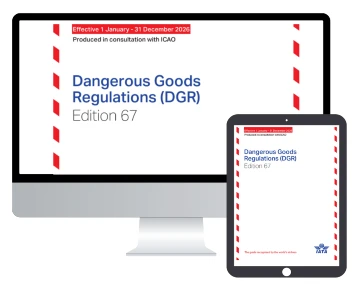
IATA Dangerous Goods Regulations 67th Edition — available from Dandy Booksellers Australia
This is one of the most common questions we receive: should I buy the IATA Dangerous Goods Regulations in print or digital? Both formats are readily available, but they are priced differently and suit different work styles. Here is a clear breakdown of how they compare and which option best fits your team.
Print and Digital: What Is the Same, and What Is Not
Whichever format you choose, you are working from the exact same rules. Both the printed manual and the eDGR contain the full content of the current edition: the same numbered sections, the same packing instructions, and the same Dangerous Goods List.[ 1 ]
Where the two formats part company is what happens during the year. When IATA issues an addendum, the digital edition is updated by IATA, helping ensure you are viewing the latest available text and addenda. A printed book does not change on its own. Any addendum has to be obtained and inserted into the book by hand, and a copy that misses that step is out of date without anyone noticing.[ 3 ] This is the single most useful difference to keep in mind when you choose, and we come back to it below.
The Printed IATA DGR: Regular or Spiral Bound
The printed DGR comes in two binding styles. The regular bound edition has a classic book spine. The spiral bound edition lies flat on the desk and stays open at the page you need, which many handlers prefer when checking entries against shipment paperwork. The content is identical. It is the same regulations, bound two different ways.
A printed copy offers several practical advantages. It can sit on a shared desk and be used by anyone without needing a login, device, or subscription. In busy counters or warehouses, this simplicity and constant availability are hard to beat.
The Digital IATA DGR (eDGR): How It Works
The digital edition is called the eDGR, and IATA delivers it through Bookshelf, its e-Reader platform.[ 2 ] When you order from Dandy Booksellers, we email you a redeem code with instructions. You create a Bookshelf account online, log in, and enter the redeem code to add the IATA DGR to your account. From there you can read it online in a web browser, or install the Bookshelf app on Windows, Mac, iOS or Android to read offline.
Two practical things to know about the redeem code. It can be used only once, and only one code can be entered per Bookshelf account. If you are buying access for several staff, each person will need their own redeem code and their own Bookshelf account.
The biggest day-to-day advantage is speed. The eDGR is fully searchable, so typing a UN number or proper shipping name instantly takes you to the right section. It also receives addenda and editorial corrections digitally during the year, while printed books reflect the content as it stood at the time of printing.[ 3 ] One more change to note: the eDGR has largely replaced the older CD-ROM format that IATA previously offered.
Price and Sharing: The Two Practical Differences
Two key differences often influence the decision: price and sharing. The digital edition is noticeably cheaper than the printed version. However, standard digital licences are generally intended for individual user access. Unlike a printed copy that anyone in the office can pick up, the digital edition is tied to a single login.
If several staff each need their own access, you would order a licence for each of them, or look at a multi-user option. For a single dangerous goods officer working on their own, digital is usually the better value. For a counter or warehouse where the book is shared around, a printed copy often makes more sense.
Which Should You Choose?
Here is a quick guide to help you decide.
Choose print if:
- multiple people need to share the manual through the day
- your team prefers working from paper
- your workspace is not well suited to screens
Choose digital if:
- one person primarily handles dangerous goods compliance
- you value fast searching by UN number or shipping name
- you need access from multiple locations
- you want the earliest possible addenda and updates
Plenty of offices do both. They keep one printed copy at the counter and hold a digital licence for the compliance officer who uses it most.
A note for Australian buyers: printed books are shipped from overseas, so digital delivery by email is usually faster. That matters when a compliance deadline is close.
See also: IATA DGR 67th Edition 2026: What It Is and What Changed, and ICAO Publications Explained.
Important: Regulations change frequently. Always verify operational requirements against the latest official IATA publication and against the applicable carrier and national regulations. This article is intended as a general guide only and does not constitute legal or compliance advice.
Frequently Asked Questions
What is the current edition of the IATA DGR?
The current edition is the 67th Edition, effective from 1 January 2026 through 31 December 2026. The DGR is updated and reissued every year.
Is the digital IATA DGR the same as the printed book?
Yes. Both contain the same core regulations for the current edition. The digital edition is fully searchable and receives addenda and editorial corrections digitally during the year.
Can more than one person use one digital IATA DGR?
Standard digital licences are generally intended for individual user access, tied to a single login. If a team needs shared access, order a licence for each user or ask about a multi-user option.
Is the digital IATA DGR cheaper than the printed copy?
Yes. The digital edition is priced lower than the printed book.
Does the printed IATA DGR update during the year?
No. A printed book carries the text as it stood when it went to press. When IATA issues an addendum, you obtain it and insert it into the book yourself. The digital eDGR is updated by IATA during the year, helping ensure you are viewing the latest available text.
How do I get access after I order the digital IATA DGR?
When you order through Dandy Booksellers, we email you a redeem code with instructions. Create a Bookshelf account online, log in, and enter the redeem code. The IATA DGR then appears in your account, ready to read online in a browser or offline through the Bookshelf app. Each redeem code is single-use and tied to one account, so multiple users will each need their own code.
Can I use the digital IATA DGR offline?
Yes. Install the Bookshelf app on Windows, Mac, iOS or Android. After you log in to your Bookshelf account, the eDGR is available without an internet connection.
Where can I buy the IATA DGR in Australia?
The IATA DGR 67th Edition is available from Dandy Booksellers Australia in print, as a regular bound or spiral bound book, and as the digital eDGR.
References
[ 1 ] IATA — Dangerous Goods Regulations (DGR) — https://www.iata.org/en/publications/dgr/
[ 2 ] IATA — Digital Manuals — https://www.iata.org/en/publications/digital/
[ 3 ] IATA — Dangerous Goods Regulations programme — https://www.iata.org/en/programs/cargo/dgr/
[ 4 ] CASA — Dangerous goods — https://www.casa.gov.au/dangerous-goods

Free Delivery

Free delivery to all Australian and New Zealand mailing addresses.
Discounted E-books
For faster turnaround.
Download link via email within a couple of hours.
Information
 Home
HomeNew Products

Email us at sales@dandybooksellers.com.au
Australia
Dandy Booksellers
58 Allambi Avenue
Broadbeach Waters
4218 Queensland
United Kingdom
Dandy Booksellers Ltd
15 Hoopers Yard
Kimberley Road
London NW6 7EJ
Company registration number: 4846829



All prices in Australian Dollars (AUD)
