




Shipping Lithium Batteries by Air and Sea: What the Regulations Actually Require
What are the regulations for shipping lithium batteries? Shipping lithium batteries requires compliance with the IATA Dangerous Goods Regulations (DGR) for air transport and the IMDG Code for sea transport. Requirements depend on battery chemistry (lithium ion or lithium metal), UN number, state of charge, and whether batteries are shipped alone or with equipment.
Lithium batteries are one of the most tightly regulated categories in dangerous goods transport — and for good reason. They can overheat, catch fire, or in rare cases undergo thermal runaway, a chain reaction that is extremely difficult to extinguish. The regulations exist to manage that risk, and they have been tightened significantly over the past decade.
If you ship lithium batteries — or products that contain them — by air or sea, here is a practical summary of what you need to know under the current IATA DGR 67th Edition 2026 and IMDG Code Amendment 42-24.
Two Battery Types, Four UN Numbers
Lithium batteries fall into two chemistry types, each with specific UN numbers depending on whether the batteries are shipped on their own or packed with equipment:
Lithium metal (primary) batteries: UN 3090 (batteries alone), UN 3091 (packed with or contained in equipment). These are typically non-rechargeable, used in items like watches, hearing aids, and certain medical devices.[ 1 ]
Lithium ion (rechargeable) batteries: UN 3480 (batteries alone), UN 3481 (packed with or contained in equipment). These power laptops, mobile phones, power tools, and electric vehicles.[ 1 ]
Getting the UN number right is the starting point for everything else — the packing instructions, quantity limits, and aircraft restrictions all follow from it.
Air Transport: IATA DGR Requirements for Lithium Batteries
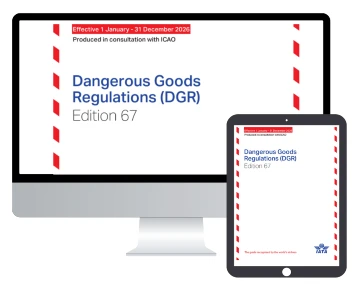
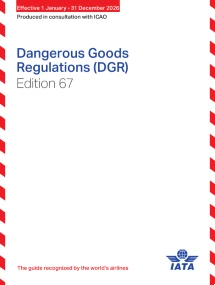
Lithium batteries are subject to some of the strictest air transport regulations of any dangerous goods category. The IATA Dangerous Goods Regulations and the IATA Battery Shipping Regulations (BSR) set out the requirements in detail, and those requirements tightened further with the 67th Edition effective 1 January 2026.[ 2 ]
See also: IATA DGR 67th Edition 2026: What It Is, What Changed, and Who Needs It
State of charge (SoC) limits — mandatory for both UN 3480 and UN 3481 from January 2026
From 1 January 2026, the mandatory =30% state-of-charge (SoC) cap applies to both main categories of lithium ion battery shipment on cargo aircraft. UN 3480 (batteries shipped alone) has carried this mandatory cap for a number of years. The 67th Edition extended the mandatory requirement to UN 3481 (batteries packed with or contained in equipment) where the cells or batteries have a Watt-hour rating greater than 2.7 Wh. This marks a significant change: the =30% SoC limit for UN 3481 was a recommendation in the 2025 DGR (66th Edition) but became a mandatory requirement from 1 January 2026. In limited cases, approval may be sought to exceed the threshold — but shippers can no longer treat this as optional best-practice guidance.[ 2 ]
Section II of the relevant packing instructions covers batteries packed with consumer goods and is commonly used by e-commerce and retail exporters. Section I applies to fully regulated dangerous goods shipments and carries more stringent requirements including advance notification to the operator.
Some batteries are prohibited from air transport altogether, including damaged, defective, or recalled batteries, and those that do not meet the testing requirements of the UN Manual of Tests and Criteria (UN 38.3). This is not a technicality — airlines actively check for compliance, and non-conforming shipments will be refused.[ 3 ]
Sea Transport: IMDG Code Requirements for Lithium Batteries
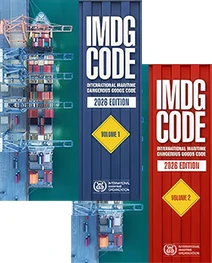
Under the IMDG Code, lithium batteries are treated as dangerous goods and must be declared and documented accordingly. Amendment 42-24 updated a number of the provisions relating to lithium battery stowage and segregation on container ships.[ 4 ]
Lithium batteries transported by sea must meet UN 38.3 testing requirements — the standard that applies across all transport modes. Shipments must be accompanied by a Dangerous Goods Declaration, and the shipper takes on legal responsibility for accuracy and completeness of that documentation.
See also: IMDG Code 2024: What It Is, Who Needs It, and Why It Matters for Sea Transport
Damaged, Defective, and Recalled Batteries
These require special handling under both IATA and IMDG rules. They must be identified as such, and in most cases require special packaging designed to contain any potential thermal event. Standard packing instructions for serviceable batteries do not apply. If you are returning recalled batteries or shipping end-of-life equipment containing batteries, specific guidance must be followed — both for your own liability and the safety of the carrier's staff and other cargo.
The IATA Battery Shipping Regulations (BSR)
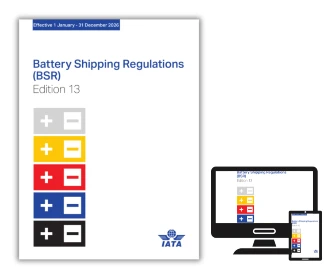
The IATA Battery Shipping Regulations (BSR) 13th Edition 2026 is a standalone publication that compiles all the IATA DGR requirements specifically relating to lithium batteries into a single, dedicated reference. It is widely used by staff who deal with battery shipments regularly, as it provides a focused resource without the need to navigate the full DGR.[ 2 ]
For any business where lithium battery shipments are a significant part of operations — consumer electronics, medical devices, EV components, power tools — keeping a copy of the BSR alongside the DGR is worth the investment.
Important: Regulations change frequently. Always verify requirements against the current official edition of the relevant publication. This article is intended as a general guide only and does not constitute legal or compliance advice.
Frequently Asked Questions
Can lithium batteries be shipped by air?
Yes, with significant restrictions. Lithium batteries must be classified by UN number, and different rules apply depending on battery chemistry (lithium ion vs. lithium metal), whether batteries are shipped alone or with equipment, and the type of aircraft. Damaged or defective batteries face additional restrictions and in many cases cannot be shipped by air at all.
What is the difference between UN 3480 and UN 3481?
Both UN numbers apply to lithium ion (rechargeable) batteries. UN 3480 is for batteries shipped alone (not in or with equipment); UN 3481 is for batteries packed with or contained in equipment. The distinction matters because packing instructions, quantity limits, and state-of-charge requirements differ between the two UN numbers.
What is the state-of-charge (SoC) limit for shipping lithium batteries by air?
From 1 January 2026 (IATA DGR 67th Edition), the mandatory =30% state-of-charge (SoC) limit applies to both UN 3480 (batteries shipped alone) and UN 3481 (batteries packed with or contained in equipment) where the cells or batteries have a Watt-hour rating greater than 2.7 Wh. This is a change from the previous edition: the =30% limit for UN 3481 was a recommendation in 2025 but became a mandatory requirement on 1 January 2026. In limited cases, approval may be sought to exceed the threshold.
Do lithium batteries need to be declared as dangerous goods?
In most cases, yes. Lithium batteries shipped under fully regulated conditions require a Shipper's Declaration for Dangerous Goods. Those shipped under certain Section II provisions may use simplified procedures and not require a full declaration, but still require specific labelling, marking, and operator notification.
What is the IATA Battery Shipping Regulations (BSR)?
The IATA Battery Shipping Regulations (BSR) 13th Edition 2026 is a standalone publication that compiles all IATA DGR requirements specifically relating to lithium batteries into a single reference. It is widely used by businesses that handle high volumes of battery shipments and is available from Dandy Booksellers Australia.
Do UN 38.3 testing requirements apply to sea transport as well as air?
Yes. The UN 38.3 testing standard — which covers the safety testing requirements for lithium cells and batteries — applies across all transport modes, including air, sea, and road. Batteries that do not meet UN 38.3 requirements cannot be shipped by any regulated transport mode.
References
[ 1 ] IATA Lithium Battery Guidance — https://www.iata.org/en/programs/cargo/dgr/dgr-lithium-batteries/
[ 2 ] IATA DGR 67th Edition — Significant Changes 2026 — https://www.iata.org/contentassets/90f8038b0eea42069554b2f4530f49ea/dgr-67-en-significant-changes.pdf
[ 3 ] CASA — Lithium Batteries (Australia) — https://www.casa.gov.au/dangerous-goods/lithium-batteries
[ 4 ] IMO — IMDG Code Amendment 42-24 — https://www.imo.org/en/OurWork/Safety/Pages/DangerousGoods-default.aspx
[ 5 ] UN Manual of Tests and Criteria (UN 38.3) — https://unece.org/transport/dangerous-goods/manual-tests-and-criteria
Related products
Free Delivery

Free delivery to all Australian and New Zealand mailing addresses.
Discounted E-books
For faster turnaround.
Download link via email within a couple of hours.
Information
 Home
HomeNew Products

Email us at sales@dandybooksellers.com.au
Australia
Dandy Booksellers
58 Allambi Avenue
Broadbeach Waters
4218 Queensland
United Kingdom
Dandy Booksellers Ltd
15 Hoopers Yard
Kimberley Road
London NW6 7EJ
Company registration number: 4846829



All prices in Australian Dollars (AUD)
