




Dangerous Goods Compliance in Australia: Road, Air and Sea Requirements
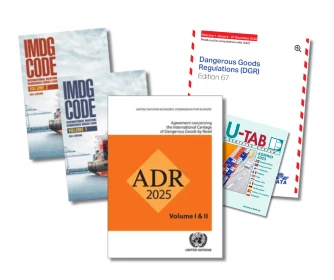
What are the dangerous goods regulations in Australia? Dangerous goods compliance in Australia covers road, rail, air, and sea — each with its own regulatory framework. CASA governs air transport under the ICAO Technical Instructions, AMSA governs sea transport under the IMDG Code, and the Australian Dangerous Goods (ADG) Code 7.9 — available to use from 1 October 2024 and mandatory from 1 October 2025 — governs road and rail nationally.
Australia has a well-established regulatory framework for the transport of dangerous goods, covering road, rail, air, and sea. For businesses operating in logistics, manufacturing, mining, chemicals, or any sector that handles hazardous materials, understanding how the framework applies is not optional — non-compliance carries significant financial and legal consequences.
This guide provides an overview of the key regulations, the authorities that enforce them, and the publications you need to stay compliant.
Air Transport: CASA and ICAO Technical Instructions
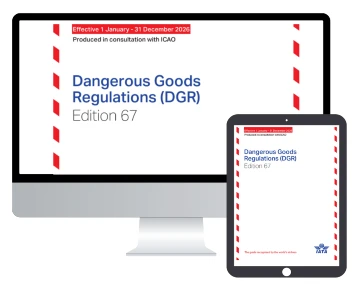
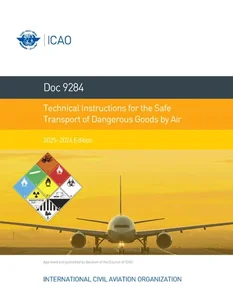
Air transport of dangerous goods in Australia is regulated by the Civil Aviation Safety Authority (CASA) under the Civil Aviation Safety Regulations (CASRs).[ 1 ] The regulations require compliance with the ICAO Technical Instructions for the Safe Transport of Dangerous Goods by Air, and in practice the IATA Dangerous Goods Regulations (DGR) is the working reference used by the aviation industry.
Operators, freight forwarders, and shippers accepting dangerous goods for air transport must ensure that goods are classified, packed, and documented in accordance with the current DGR. CASA also requires that personnel who accept or handle dangerous goods hold valid dangerous goods training recognition that is current for the edition of the DGR in use.
See also: IATA DGR 67th Edition 2026: What It Is, What Changed, and Who Needs It
Sea Transport: AMSA and the IMDG Code
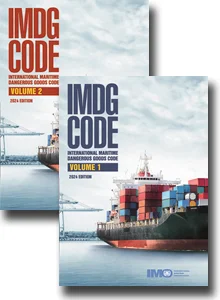
Maritime transport of dangerous goods is overseen by the Australian Maritime Safety Authority (AMSA).[ 2 ] Australia requires compliance with the IMDG Code for all international voyages, and the same standards apply to vessels in Australian coastal trade. AMSA has the authority to inspect vessels and cargo, and can prevent a vessel from departing if dangerous goods documentation or stowage does not comply.
Enforcement at the point of loading is shared between AMSA, state port authorities, and state workplace safety regulators. In practice, major ports across Australia — including Brisbane, Sydney, Melbourne, and Fremantle — require container packing certificates and accurate Dangerous Goods Declarations as a condition of loading DG cargo.
See also: IMDG Code 2024: What It Is, Who Needs It, and Why It Matters for Sea Transport
Road and Rail: The Australian Dangerous Goods Code 7.9
For road and rail transport, the primary reference is the Australian Dangerous Goods Code (ADG Code), published by the National Transport Commission (NTC). The current edition is ADG Code 7.9, which became available to use from 1 October 2024 and mandatory from 1 October 2025.[ 3 ] Each Australian state and territory has its own legislation that adopts the Code, so the same core rules apply nationally — though some states may have different commencement dates, so it is worth checking with your local transport authority. In Queensland, for example, dangerous goods transport is implemented through the Transport Operations (Road Use Management — Dangerous Goods) Regulation, with state transport agencies responsible for roadside enforcement.
The ADG Code 7.9 is available as a free PDF download from the NTC website. That said, many drivers, warehouse operators, and compliance staff prefer a printed copy for daily use in the field — a PDF on a phone or laptop is not always practical at the roadside or on the loading dock.
Dangerous Goods Safety Advisers
Many larger organisations appoint a Dangerous Goods Safety Adviser (DGSA) — an individual with specialist knowledge who is responsible for helping the business stay compliant, conducting internal audits, training staff, and liaising with regulators. In Europe, DGSAs are legally mandated for certain operations under ADR (road), RID (rail), and ADN (inland waterway); in Australia, while not universally required by law (requirements vary by state and sector), their role is recognised as best practice and increasingly expected by insurers and large clients.
Consequences of Non-Compliance
The penalties for dangerous goods non-compliance in Australia are substantial. Fines can reach hundreds of thousands of dollars per breach, and in serious cases where non-compliance contributes to an incident, criminal liability for individuals can arise. Beyond the legal consequences, rejected shipments, aircraft or vessel delays, and damage to relationships with carriers and customers are the immediate operational realities of getting it wrong.
Insurance considerations also apply — a claim arising from an undeclared or incorrectly documented DG shipment may not be covered, leaving the business fully exposed to loss.
Shipping Lithium Batteries in Australia
Lithium batteries are subject to specific and frequently updated regulations under both CASA (air) and AMSA (sea). If your business ships devices, power tools, or battery-containing goods domestically or internationally, it is worth reviewing the current requirements carefully.
See also: Shipping Lithium Batteries by Air and Sea: What the Regulations Actually Require
Staying Current with Dangerous Goods Regulations
The most practical step any business can take is ensuring that the relevant publications are up to date and accessible to the people who need them. For most Australian operations involved in road, air, or sea freight of dangerous goods, this means holding current copies of the ADG Code, the IATA DGR (for air), and the IMDG Code (for sea).
Dandy Booksellers Australia is an official distributor of IMO publications and stocks current editions of the DGR, IMDG Code, SOLAS, and related titles. All publications are available in print and digital formats, with fast email delivery for eBooks.
Important: Regulations change frequently. Always verify requirements against the current official edition of the relevant publication. This article is intended as a general guide only and does not constitute legal or compliance advice.
Frequently Asked Questions
What is the Australian Dangerous Goods Code?
The Australian Dangerous Goods (ADG) Code is published by the National Transport Commission (NTC) and governs the transport of dangerous goods by road and rail nationally. The current version, ADG Code 7.9, became mandatory on 1 October 2025. It is available as a free PDF download from the NTC website.
Which authority regulates dangerous goods transport by air in Australia?
The Civil Aviation Safety Authority (CASA) regulates dangerous goods transport by air under the Civil Aviation Safety Regulations (CASRs). CASA requires compliance with the ICAO Technical Instructions, and in practice the IATA DGR is the industry working reference.
Which authority regulates dangerous goods transport by sea in Australia?
The Australian Maritime Safety Authority (AMSA) is the competent authority for dangerous goods at sea. AMSA enforces compliance with the IMDG Code for international voyages and Australian coastal trade. Enforcement at the point of loading is shared between AMSA, state port authorities, and state workplace safety regulators.
When did ADG Code 7.9 become mandatory?
ADG Code 7.9 became available to use from 1 October 2024 and mandatory on 1 October 2025, following a 12-month transition period from ADG Code 7.8. Some states may have different commencement dates — check with your local transport authority to confirm. It is available as a free PDF download from the National Transport Commission (NTC) website.
What are the penalties for dangerous goods non-compliance in Australia?
Penalties can reach hundreds of thousands of dollars per breach. In serious cases where non-compliance contributes to an incident, criminal liability for individuals may arise. Undeclared or incorrectly documented DG shipments may also affect insurance coverage, potentially leaving a business fully exposed to loss.
Do I need one set of publications for all transport modes?
No — each transport mode has its own regulatory framework. For air, you need the IATA DGR; for sea, the IMDG Code; for road and rail, the ADG Code 7.9. Businesses that operate across multiple modes should hold current editions of each relevant publication.
References
[ 1 ] CASA — Dangerous Goods (Australia) — https://www.casa.gov.au/dangerous-goods
[ 2 ] AMSA — Dangerous Goods at Sea — https://www.amsa.gov.au/vessels-operators/sea-cargo/dangerous-goods
[ 3 ] National Transport Commission — ADG Code 7.9 — https://www.ntc.gov.au/codes-and-guidelines/australian-dangerous-goods-code
[ 4 ] IMO — Official Publications — https://www.imo.org/en/OurWork/Safety/Pages/DangerousGoods-default.aspx
Related products
Free Delivery

Free delivery to all Australian and New Zealand mailing addresses.
Discounted E-books
For faster turnaround.
Download link via email within a couple of hours.
Information
 Home
HomeNew Products


Email us at sales@dandybooksellers.com.au
Australia
Dandy Booksellers
58 Allambi Avenue
Broadbeach Waters
4218 Queensland
United Kingdom
Dandy Booksellers Ltd
15 Hoopers Yard
Kimberley Road
London NW6 7EJ
Company registration number: 4846829



All prices in Australian Dollars (AUD)
